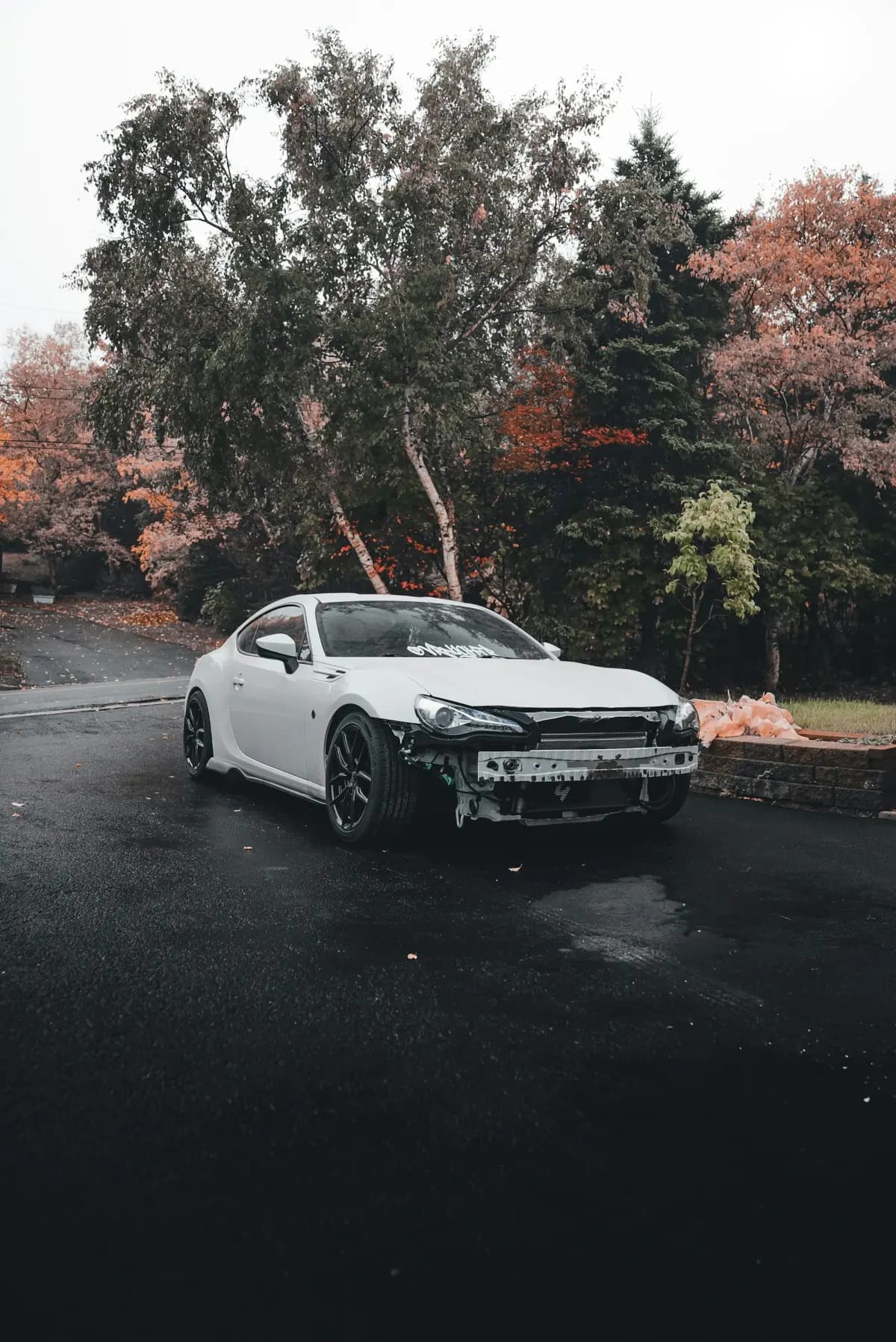
Decide what work you'll do
Before you sign a lease or price a booth, decide where your work will come from. It decides the equipment you need, who you hire and how quickly you get paid.
| Work | Where it comes from | What it asks of you | How you're paid |
|---|---|---|---|
| Private and cash | Walk-ins, referrals, Google and WhatsApp | A clear quote and a good finish. No approvals needed. | The customer pays when they collect |
| Insurance | Insurers' panels of approved repairers | Insurer approval: qualified staff, a certified booth, measuring kit, Audatex and a lot of paperwork | The insurer pays what it authorised; the customer pays the excess |
| Fleet and trade | Fleets, rental companies, dealerships and used-car dealers | Quick turnaround, consistent prices and monthly invoicing | On account, usually 30 days |
Insurers send claims to their approved repairers, so a brand-new shop sees little insurance work. Most new shops start with private and trade work, build a track record and the paperwork, then apply to insurer panels. SAMBRA's own application form asks whether the business has traded for more than six months under its current owner.
You can also start narrower: bumper and plastic repair, paintless dent removal, smart repairs or restorations need less space and kit, and can grow into full collision work.
Register the business
A sole proprietor doesn't register with CIPC: the business is you, and its profit is taxed as your income. Most shops register a private company (Pty) Ltd instead. It keeps the business separate from you, and it's what insurers, fleets and landlords expect to deal with. These are the registrations, in the order you'll need them:
| Registration | Where | When | Cost |
|---|---|---|---|
| Private company | CIPC, on BizPortal | Before you trade | R175 with a name reservation |
| Income tax | SARS, automatic for a new company | Issued with your company registration | Free |
| PAYE and UIF (and the Skills Development Levy once payroll passes R500 000 a year) | SARS eFiling, with monthly UIF declarations on uFiling | Within 21 business days of employing anyone | Free to register |
| COIDA (injury on duty) | Compensation Fund, online or through BizPortal | Within 7 days of employing your first worker | A yearly assessment based on your wage bill |
| MIBCO | Motor Industry Bargaining Council | Within 30 days of starting business, with every employee | Weekly levies and fund contributions |
| VAT | SARS eFiling | Once taxable turnover passes R2.3 million in 12 months (voluntary from R120 000) | Free to register |
| Information Officer (POPIA) | Information Regulator, or through BizPortal | Before you start keeping customers' details | Free |
| MIOSA | Motor Industry Ombudsman, online | When you start trading | A levy, invoiced by MIOSA |
SARS has applied the R2.3 million and R120 000 VAT thresholds since 1 April 2026; the law confirming the change was still before Parliament in October 2026. Companies also file an annual return with CIPC every year (R100 while turnover is under R1 million).
MIBCO: the one new owners miss
The motor industry has its own bargaining council. MIBCO's Main Collective Agreement (22 December 2025 to 31 August 2028) is extended to every employer in the industry, member of an association or not, and body repairers are covered under Sector 4. You register the business within 30 days of starting and register every employee. In 2026/27 you then pay, every week, a council levy of R3.84 per employee (with another R3.84 deducted from each employee's pay) and R20.30 per employee to the Sick, Accident and Maternity Fund (R28.12 for women). Employees on the industry's provident funds contribute 7.5% of pensionable pay and you add 8%. Returns and payments are due by the 10th of the following month.
B-BBEE
With turnover up to R10 million you're an Exempted Micro Enterprise: a sworn affidavit (or a certificate from CIPC on BizPortal) gives your B-BBEE level, from Level 1 for a 100% black-owned business to Level 4 below 51%. Insurers ask for it when you apply to their panels.
Find premises you can spray in
This is where most first-time owners get caught. Panel beating and spray painting are industrial uses, and every metro we checked rules them out as a home business:
- Johannesburg: industrial purposes, including repairs and spray painting, are a primary right in the Industrial 1, 2 and 3 zones. Panel beating and spray painting are prohibited in the business zones and as a home enterprise.
- Cape Town: a motor repair garage is a primary use in General Industry 1 and 2, and needs the City's consent in some business and mixed-use zones. Home occupations can't include panel beating or spray painting.
- eThekwini: a motor garage, which includes panel beating and spray painting, is a primary use in General Industry and needs special consent in Light Industry. Home businesses can't do either.
Ask the municipality for the property's zoning certificate before you sign the lease; insurers ask for one too. The building also needs approved plans for the way you'll use it and an occupancy certificate, so converting a warehouse into a body shop needs municipal approval first.
How much space you need
There's no South African standard. For a sense of scale, Lightstone once compared a 600 m² workshop in Sandton with a 400 m² one in Vereeniging, and American planners allow two to three bays of about 3.7 by 6.1 metres for every technician. A combination spray booth alone takes about 7 by 4 metres, and a booth big enough for a minibus taxi just over 8 by 4.
What goes where
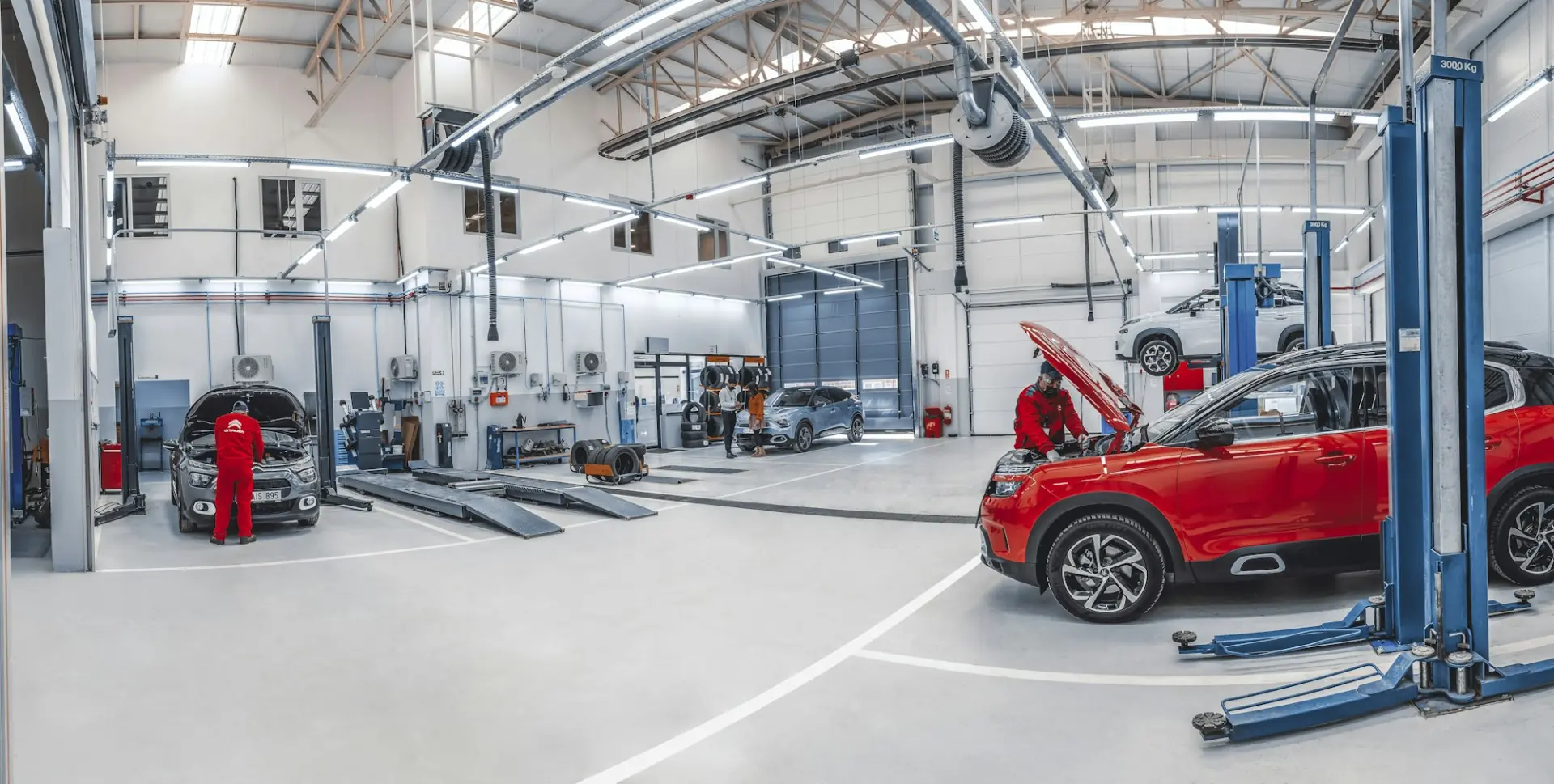
SAMBRA's grading checklist is a good floor plan to work from. It looks for:
- A reception separate from the workshop, client parking, and secure storage for customers' cars with an alarm.
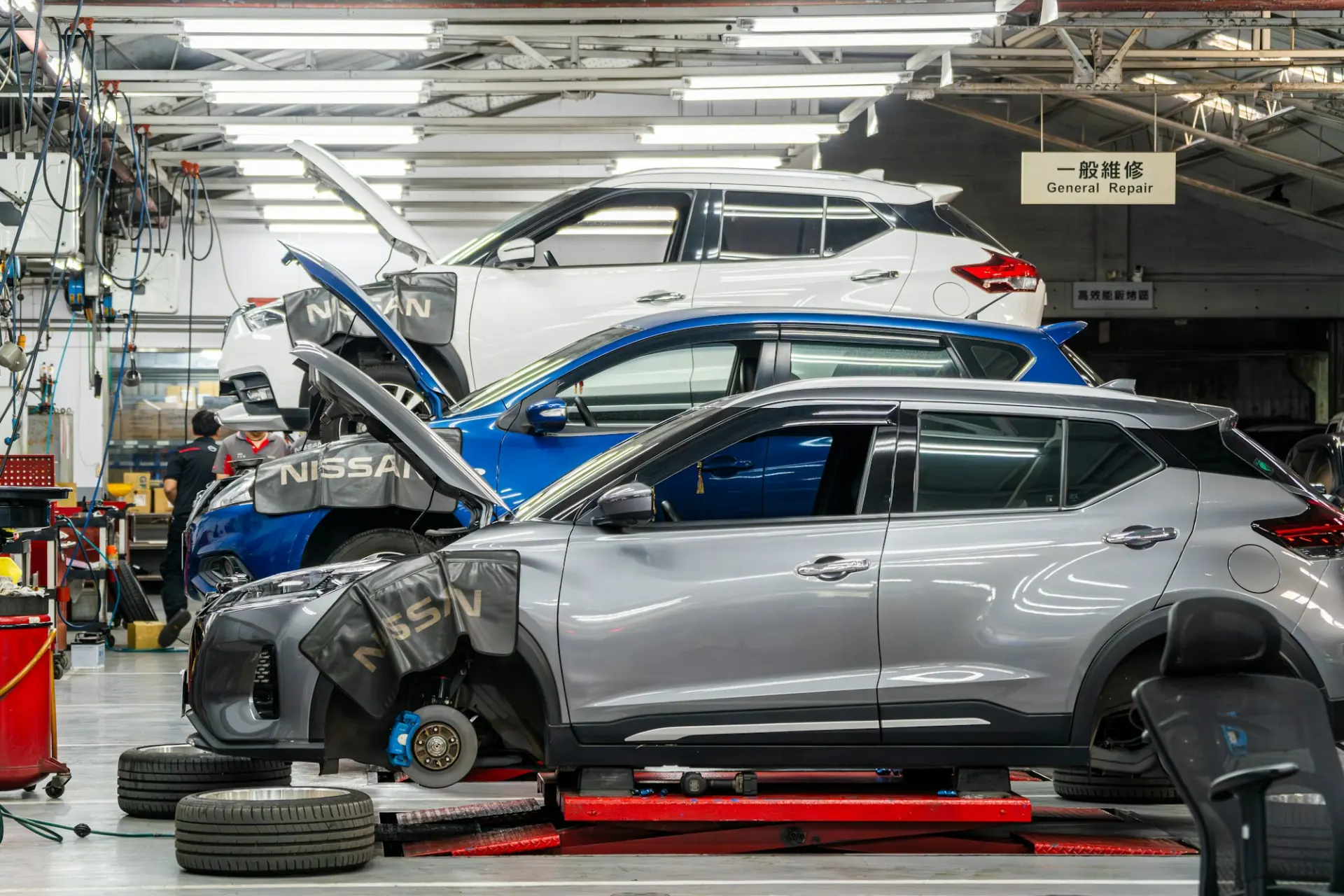
- A quotation bay, a strip and assembly area, and roofed, marked-out panel bays.
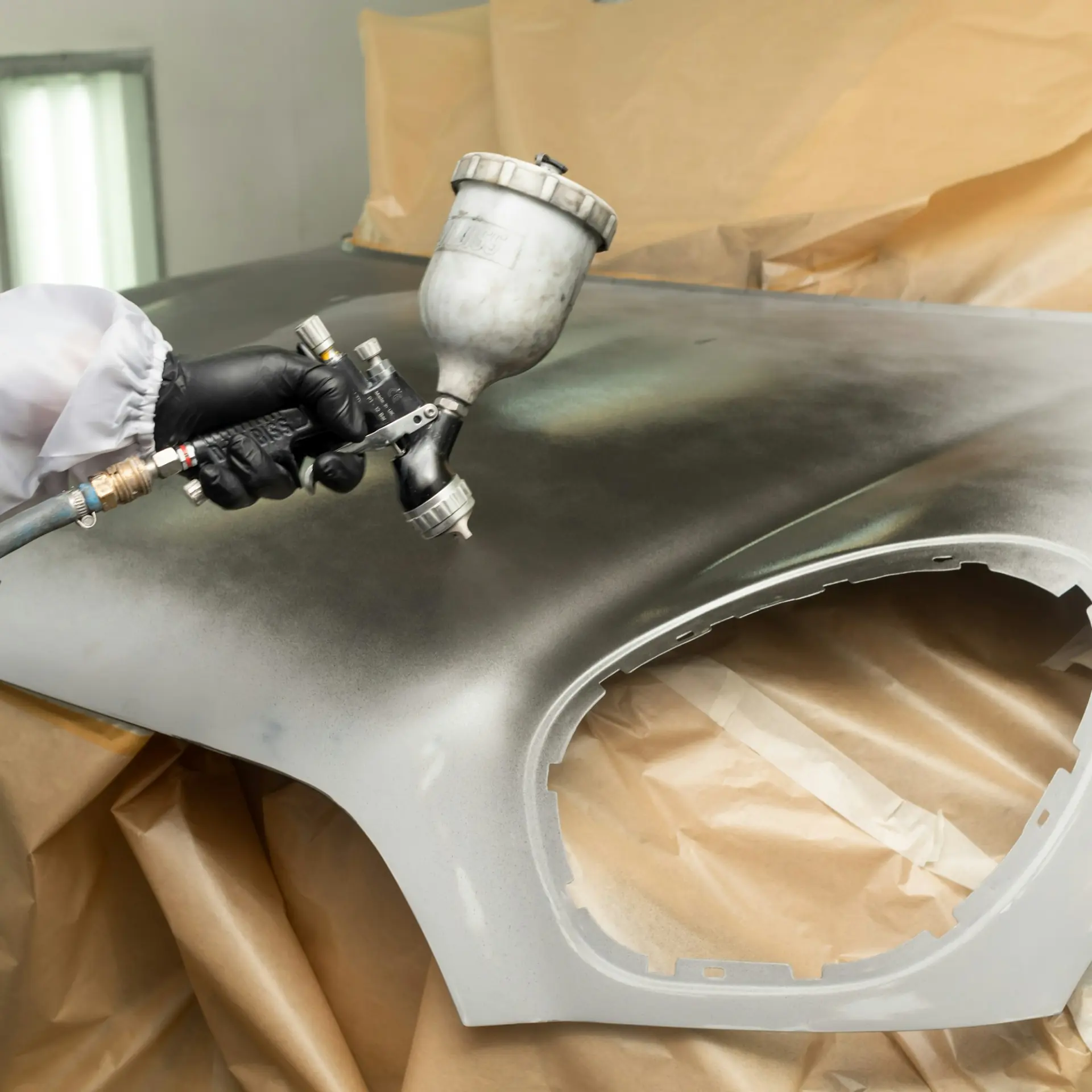
- The paint shop: a commercially made booth with its compliance certificate, a mixing room vented to the outside, and prep bays with extraction.
- A separate compressor room, and an area for receiving and storing parts.
- A polishing and wash bay with a grease and oil trap, and a quality-control bay.
- Toilets for clients and staff, and a staff kitchen.
Power and rent
Check the electrical supply before you commit. A 7.5 kW compressor runs on 380 V three-phase power, and a booth-oven's fans draw about 7.5 kW on top of its diesel or gas burner. Electricity keeps getting dearer: NERSA approved an average increase of 9.01% for municipal customers from 1 July 2026.
| Metro | Areas and asking rents (excluding VAT) |
|---|---|
| Johannesburg and Ekurhuleni | City Deep R40–R70, Kya Sand R45–R71, Wadeville R42–R60, Germiston R42–R95, Strijdom Park R65–R95, Midrand R70–R107 |
| Pretoria | Pretoria West R34–R70, Rosslyn R45–R65, Silverton R57–R90, Centurion R85–R150 |
| Cape Town | Epping R65–R109, Southern Suburbs R65–R142, Montague Gardens R85–R129 |
| Durban | Jacobs R35–R80, Durban Central R50–R91, Pinetown R65–R113, New Germany R65–R125 |
Asking rents on a national commercial property portal, 19 October 2026. Rode's survey put industrial rents up 7.2% nationally in the year to the second quarter of 2026. At R60 to R100 per m², a 500 m² unit costs R30 000 to R50 000 a month.
Permits, health and safety
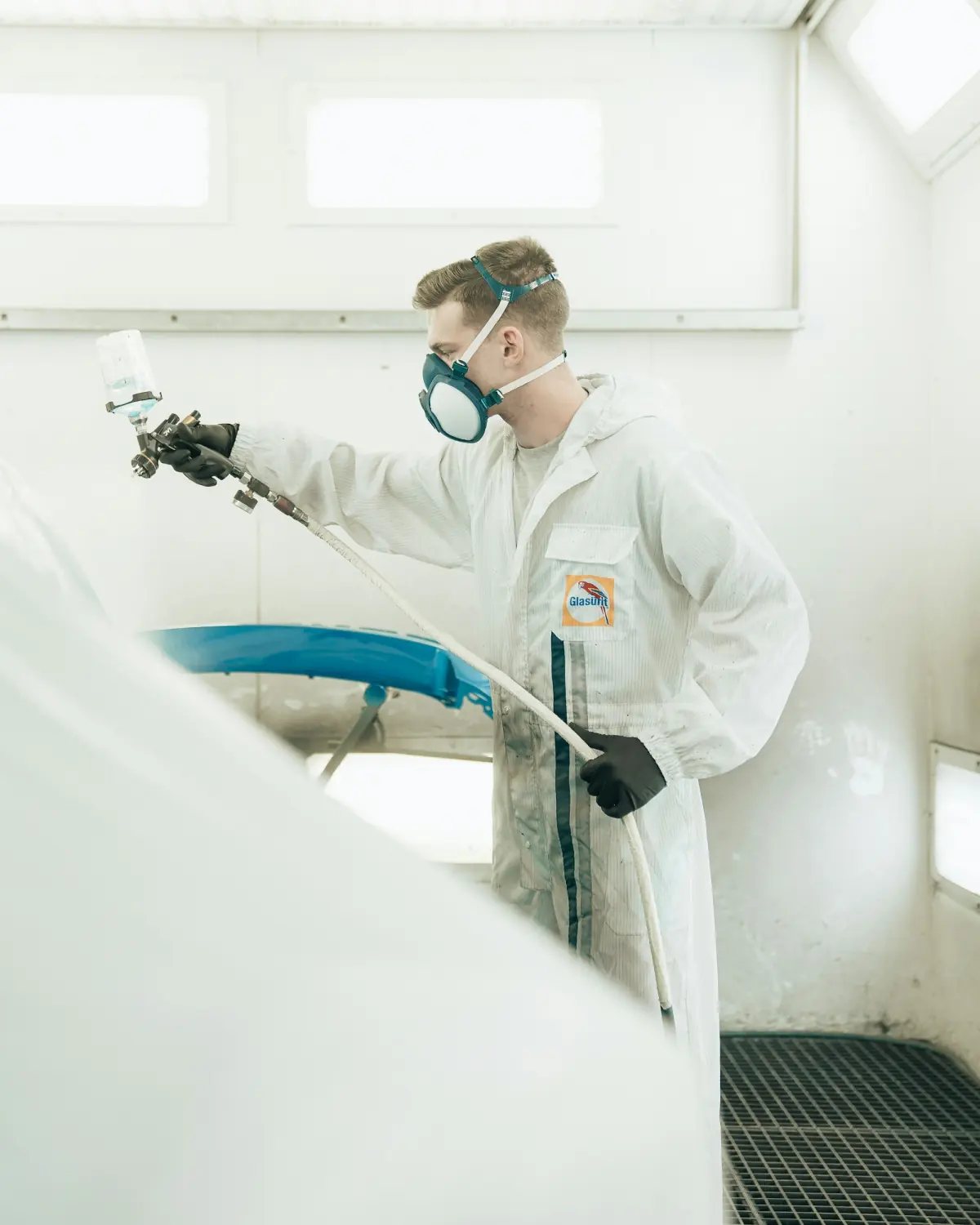
Spray painting is regulated nationally by the Occupational Health and Safety Act and locally by each metro's fire and air quality by-laws. The national rule comes first: the General Safety Regulations allow spraying only in a fire-resisting room or booth with forced ventilation, with a respirator for every sprayer, two outward-opening exits from any spray room over 20 m², and no more than a day's paint inside. On top of that, the metros want permits:
| Metro | Spraying | Storing paint and thinners |
|---|---|---|
| Johannesburg | A spraying permit and a spray room approved by the Chief Fire Officer. The air pollution by-laws also list spray booths among activities needing a City permit, so ask about both | A certificate of registration above 40 litres of Class I flammables, or 210 litres of Class II and IIIA |
| Cape Town | Spray only in a booth approved by the City for emissions, ventilation and noise, with dust extraction for sanding | A flammable substance certificate above 200 litres |
| eThekwini | A spraying permit, valid for 12 months, and a booth that meets the municipality's requirements, with dust extraction for sanding | A dangerous goods certificate above 500 litres of most thinners |
Other municipalities have their own by-laws. Talk to the fire department and environmental health before the booth goes in, not after.
Your flammables store needs two-hour fire resistance, a bund that holds everything in it plus 10%, and warning signs. The by-laws also set rules for the booth's exhaust (at least a metre above the roof and away from openings), its electrics (built for hazardous areas, with a certificate) and its fire equipment (dry-powder extinguishers inside and outside, and a hose reel).
Health and safety
- Hazardous chemicals: the Regulations for Hazardous Chemical Agents (2021) ask for a risk assessment straight away and at least every two years, exposure controls and protective equipment, and medical surveillance where a chemical calls for it. The isocyanate hardeners in two-pack paints are the main exposure in a paint shop.
- First aid: a first-aid box once you have more than five employees, a trained first aider for every 50 once you have more than ten, and an eyewash station where chemicals can splash.
- Compressor: the air receiver needs an inspection and pressure test by an approved inspection authority at least every 36 months (the smallest receivers can be inspected by the owner).
- Vehicle lifts: a lifting machine inspector examines and load-tests them before use and at least every 12 months, with checks by a competent person every six months, all kept in a register.
- Electrics: a valid electrical certificate of compliance for the building.
- Safety representatives: designate them once you have more than 20 employees.
Waste
Paint sludge, used thinners, filters and old oil are hazardous waste. Use licensed waste contractors and keep the signed manifest for every load for five years: it's your proof that the waste was disposed of safely. If you produce more than 20 kg of hazardous waste a day you must register on the national waste information system, and used oil goes to a ROSE Foundation-approved collector.
Equip the workshop
The paint shop and the structural repair kit are the big costs. This is what the main items cost from South African suppliers on 19 October 2026:
| Item | Guide price | Notes |
|---|---|---|
| Combination spray booth (car size) | R225 000 – R360 000 | Excluding VAT, from local booth makers; waterborne-ready booths at the top of the range. Used booth-ovens sold for R70 000 – R157 000 in 2019. |
| Open-face booth for loose panels | R55 000 – R62 000 | Handy for bumpers and smaller parts. |
| Chassis bench and electronic measuring | On request | Used benches sold for R65 000 – R75 000 in 2019. Needed for structural repairs. |
| Inverter spot welder | About R240 000 | Excluding VAT. SAMBRA's structural grading asks for at least 9 000 amps. |
| MIG/MAG welder | R10 000 – R32 500 | A body-shop machine is about R32 500 excluding VAT. |
| Stud welder and dent puller | R13 000 – R39 500 | Excluding VAT. |
| Compressor (7.5 kW, 500 litres) | R31 000 – R53 000 | Including VAT. Add a refrigerated dryer (R19 000 – R29 000) and the air lines. |
| Two-post lift | R41 000 – R56 000 | Plus installation. |
| Infrared curing lamp | About R42 500 | Excluding VAT. |
| Dust extraction and sanders | About R45 000 | For a mobile extraction unit; sanders from about R3 500. |
| Diagnostic scan tool | R9 000 – R80 000 | To reset airbags and check driver-assistance systems after a repair. |
| Spray guns, hand tools, stands and PPE | Varies | A half-mask respirator starts at about R750; air-fed masks cost more. |
List prices from South African equipment suppliers and booth makers on 19 October 2026, with and without VAT as marked; 2019 figures from SAMBRA's used equipment catalogue. Get quotes: prices move with the rand.
Added up, the main items come to roughly R775 000 to R865 000 before VAT, without the bench and measuring system, the mixing room, spray guns, hand tools, protective equipment, air lines, electrical work or building changes. The spot welder and the measuring kit are what structural repairs need, so a shop starting with bolt-on panels and resprays can start smaller and add them later.
Your paint supplier
Choose the paint brand before you fit the mixing room, because the supplier comes with it. The main refinish brands in South Africa come from Axalta (Spies Hecker, Standox, Cromax), Surventis (Glasurit and R-M, formerly BASF's), AkzoNobel (Sikkens), PPG and local makers. Distributors back shops with training, colour tools and technical help. Any deal on mixing equipment in return for buying their paint is negotiated shop by shop, so get the terms, especially the volumes you commit to, in writing. SAMBRA's grading asks for a computerised mixing bench and a digital scale.
Buy, finance or buy used
Some booth makers sell on a deposit of 55% to 60% with the rest over six to eighteen months. SEDFA, the government's small business finance agency, offers asset finance over up to 60 months, banks offer instalment sales over 24 to 72 months, and Business Partners finances new equipment from R250 000 for businesses that have traded for two years. Used equipment can halve the bill, but insist on a booth's compliance certificate and an inspection before you pay.
Hire your team and pay them right
Insurers and SAMBRA both expect at least one qualified panel beater and one qualified spray painter, so plan the team around them. MIBCO sets the minimum pay for each job:
| Role | MIBCO code and grade | Minimum per hour |
|---|---|---|
| Panel beater (automotive body repairer) | XA, Grade 8 | R95.25 |
| Spray painter | XK, Grade 8 | R95.25 |
| Body shop assistant | QT, Grade 5 | R55.69 |
| Apprentice panel beater or spray painter | YA or YK, apprentice scale | R46.07 – R70.23 |
Grade 8 is R4 286.25 for a 45-hour week, and rises to R100.01 an hour on 1 September 2027. You may not employ a body shop assistant without at least one artisan, and assistants may not outnumber artisans by more than one. Office and stores staff have their own scales. Check any job in our MIBCO wage checker.
What “qualified” means
A qualified artisan has passed a trade test at a QCTO-accredited trade test centre; the industry still calls the certificate a red seal. Experienced people without papers can qualify through Artisan Recognition of Prior Learning (ARPL).
Train your own
Apprentices are how most shops grow their own artisans, and merSETA helps pay for them. Its discretionary grants for 2026/27 pay employers up to R206 290 per apprentice, in tranches until the trade test is passed, and R35 000 to R55 000 per ARPL candidate. Funding opens in windows during the year, so watch merSETA's calendar. Registered learnerships also earn a tax allowance (section 12H) for agreements signed by 31 March 2027.
What a person really costs
On top of wages, budget for employer UIF (1% of pay, up to R17 712 a month), the Skills Development Levy (1% once your payroll passes R500 000 a year), your COIDA assessment, and MIBCO's levies and fund contributions. Then remember that not every paid hour is a sold hour.
Free toolMIBCO wage checkerMinimum wages for every job in your workshop, the 1 September increase, overtime and the holiday bonus, plus what an hour of each person really costs you.
Insure the business
Your own insurance has to protect your customers' cars as well as your shop. Speak to a broker who knows the motor trade about:
- Motor traders' cover for customers' cars in your care (internal risk) and on the road for test drives and deliveries (external risk), with third-party liability.
- Public and product liability.
- Fire and theft cover for your equipment, stock and contents.
- SASRIA cover for riot and unrest damage.
- Business interruption, so a fire doesn't take your income as well.
If you want insurance work, insurers set the floor. Santam's requirements ask for at least R2 million per occurrence for public liability, fire, theft and SASRIA, and SAMBRA's grading checks for motor traders' and liability cover.
Set your prices and paperwork
Work out your labour rate
Your hourly rate has to cover more than wages: the paid hours you can't sell, leave, levies, rent, power, insurance, software and a profit. Start from what an hour of each person really costs, add your overheads per hour you can sell, then your margin. Our guide to working out your labour rate takes you through it with a worked example.
For reference, SAMBRA recommended an industry base rate of R400 an hour in 2020, and in 2024 the Collision Repair Association put panel shop labour rates at R350 to R500 an hour. Insurance work is priced largely through Audatex, so on insurer jobs the rate is agreed with the insurer, not set by you. Paint and materials are usually charged per panel.
Quote the way the law asks
The Consumer Protection Act requires an estimate before you repair a customer's car, unless they decline one in writing or set a maximum. The estimate breaks down the work and the cost, and says how long it's valid and when the car must be collected. You can only charge for quoting or stripping if you said so upfront and the customer agreed, and you can't go over the estimate without their approval. Our guide to quoting panel beating work covers each rule.
New and reconditioned parts, and the labour to fit them, carry a three-month warranty. Give the customer their old parts back unless they don't want them or the parts go to the insurer under a claim.
Free toolPanel beater quote templateParts, labour, paint and VAT added up, with the Consumer Protection Act terms already printed on it. PDF, Word or Excel.Check every car in
The Act also makes you responsible for taking reasonable care of the customer's car while you have it. Record existing damage, the fuel level and what came with the car, and take photos, before any work starts. Insurers ask for a check-in process too.
Free toolVehicle check-in sheetA printable check-in and check-out sheet with your logo: a car outline for existing damage, fuel level and signatures.Invoice correctly
Only a VAT vendor may charge VAT or call its invoice a tax invoice. On insurance jobs you invoice the insurer for its share and the customer for the excess.
Free toolPanel beater invoice templateA tax invoice with the details SARS asks for, or a plain invoice if you're not registered, plus the insurer and excess invoices for insurance jobs.Win your first work
A new shop has no panel approvals and no reviews yet, so the first work is private, fleet and trade work. Make yourself easy to find and easy to trust:
- Set up your Google Business Profile with your hours, photos of real repairs and a WhatsApp number, and ask every happy customer for a review.
- Put up signage people can read from the road.
- Call on local fleets: couriers, delivery firms, car rental branches and driving schools. They want consistent prices, fast turnaround and one invoice a month.
- Offer reconditioning to used-car dealers and overflow work to dealerships.
- Once your staff, equipment and paperwork meet insurers' criteria, apply to their panels. Our guide to getting insurance work and our Audatex guide explain how that work runs.
What it costs to start
There's no reliable published figure for what a small panel shop costs to open, so build your own budget. Cover these lines:
| Line | Rough figure | Notes |
|---|---|---|
| Core equipment | R775 000 – R865 000 before VAT | Booth, welders, compressor and dryer, lift, curing lamp, extraction and scan tool, at list prices |
| Chassis bench and measuring system | Get quotes | For structural repairs; used benches from about R65 000 in 2019 |
| Mixing room, spray guns, tools and PPE | Get quotes | Negotiate the mixing scheme with your paint supplier |
| Building, electrical work and air lines | Get quotes | Three-phase power, booth ducting and mixing-room ventilation |
| Rent | R30 000 – R50 000 a month | For 500 m² at R60 – R100 per m², plus a deposit |
| Registrations, permits and certificates | Small | Company registration is R175; budget for booth certificates and inspections |
| Insurance | Get quotes | At least R2 million per occurrence if you want insurer work |
| Working capital | Three to six months of costs | Wages, rent and paint while you wait to be paid; fleets and insurers pay on terms |
SEDFA asset finance
Up to 60 months
For new or used equipment with serial numbers.
NYDA grant
Up to R200 000
For South Africans aged 18 to 35; vehicles aren't funded.
Booth makers' terms
55–60% deposit
The balance over six to eighteen months, from some local makers.
SEDFA's fund for township and rural businesses, which automotive businesses can apply to, offers up to R1 million: up to half (no more than R100 000) as a grant and the rest as a loan at 5%. Banks offer instalment sales, and Business Partners finances new equipment for established businesses.
Your start-up checklist
The whole journey on one page:
- 1
Decide your work
Private, trade or insurance, or a specialist niche. It sets everything that follows. - 2
Register the company
CIPC on BizPortal, then SARS, and line up PAYE, UIF, COIDA and MIBCO for your first hire. - 3
Secure zoned premises
Zoning certificate first, then approved plans, power and a lease that allows the use. - 4
Get the permits
Spraying permit, flammable liquids certificate and booth approval from your municipality. - 5
Fit out the workshop
Booth, mixing room, compressor, welders, lift and extraction, with certificates for each. - 6
Hire qualified people
A trade-tested panel beater and spray painter, registered with MIBCO and paid at least the minimum. - 7
Insure the business
Motor traders', liability, fire and theft, SASRIA and business interruption. - 8
Set up your paperwork
Rates, quotes that follow the Consumer Protection Act, check-in sheets, job cards and invoices. - 9
Open for private and trade work
Google Business Profile, signage, reviews, fleets and dealers. - 10
Apply to insurer panels
Once you meet their criteria, with your documents ready.